
How to Optimize Pneumatic Control Systems with the Right Timers
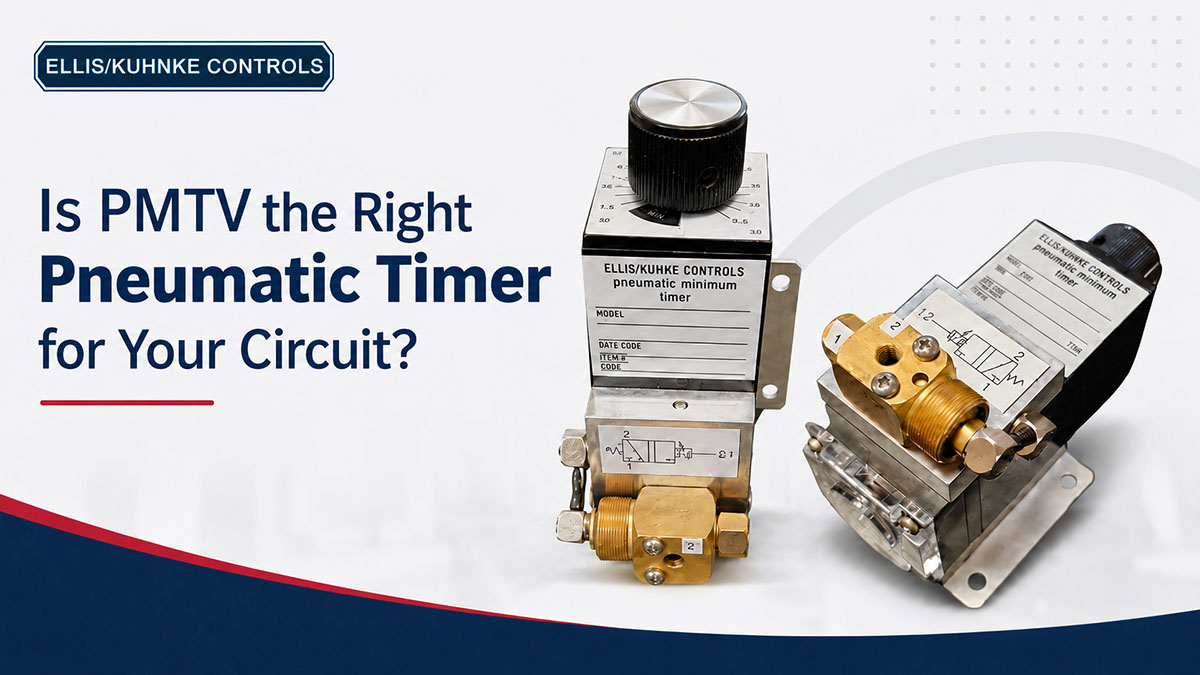
PMTV Pneumatic Timer: When to Choose a Miniature Timer With a 3-Way Output Valve
Most shoppers looking at timers already know they need a delay to ensure proper functions of pneumatic control systems. The harder question is what should happen if the pneumatic control signal disappears before the delay finishes. That question matters more for PMTV than almost anything else.
PMTV timing starts when pilot pressure is continuously applied to the control port. If pilot pressure is removed, the timer resets, regardless of whether the selected interval has finished. That makes PMTV useful for circuits where the timing cycle should exist only while the control condition remains present.
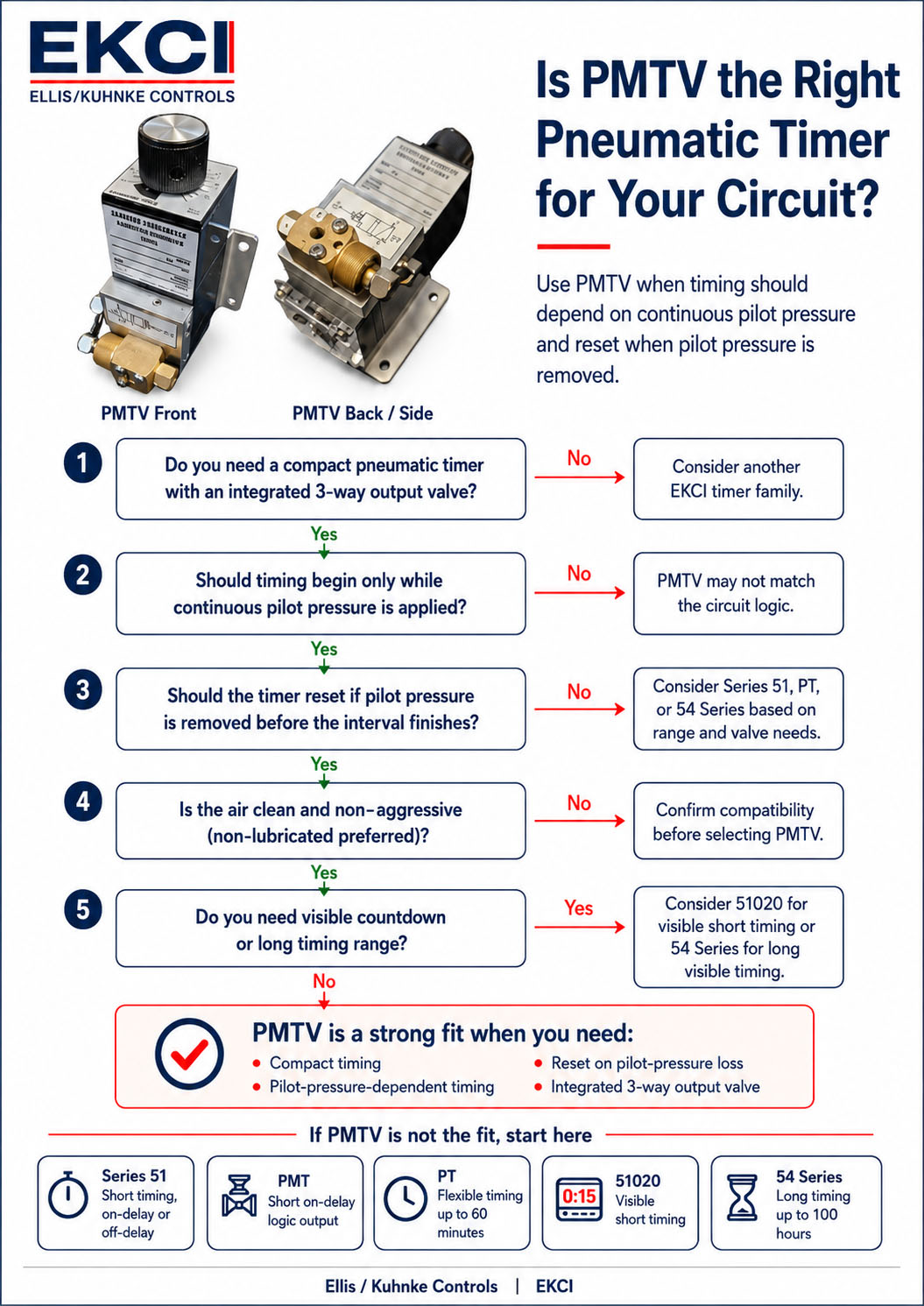
PMTV is not the best timer in every situation. It is the better fit when the circuit needs a compact timer, an integrated 3-way output valve, clean continuous pilot pressure, and immediate reset when pilot pressure drops. If the circuit needs timing to continue after the pilot signal disappears, visible countdown, long timing ranges, off-delay behavior, or 4-way valve function, another EKCI timer family is likely the better choice.
What Makes PMTV Different?
PMTV is a miniature pneumatic timer with an integrated 3-way output valve. Timing begins only when pilot pressure is continuously applied to the control port. Removing pilot pressure resets the timer, even if the time interval has not elapsed.
That reset behavior is the central selection point. In a real machine, pilot pressure is not only a start signal. It grants the timing cycle permission to keep running. When that permission is removed, PMTV stops the timing event and returns to the reset state.
That behavior helps when the circuit should not complete the timed output after the control condition drops. It hurts when the process needs the timing cycle to continue or hold after the signal changes.
Use PMTV when the circuit should reset on pilot-pressure loss. Do not use PMTV when the circuit needs the timer to finish the interval after the pilot pressure disappears.
The Main Question PMTV Answers
The buyer should ask one question first: Should the timer reset immediately when pilot pressure is removed?
If yes, PMTV deserves a close look. If not, another pneumatic timer is likely a better fit. This is the practical difference between choosing based on circuit logic and choosing based on timing range.
PMTV fits when:
- The circuit has a clean, stable pilot-pressure signal.
- The timing cycle should run only while pilot pressure remains present.
- The timer should reset as soon as pilot pressure disappears.
- The circuit benefits from an integrated 3-way output valve.
- The application needs a compact timer body.
- The system uses filtered air or non-aggressive gas, non-lubricated.
PMTV does not fit well when:
- The timer must continue timing after pilot pressure drops.
- The circuit needs off-delay behavior from another timer architecture.
- The operator needs a visible countdown or panel display.
- The timing range needs to extend into longer dwell periods.
- The circuit needs a 4-way valve behavior.
- The air supply is dirty, wet, lubricated, aggressive, or unstable.
This is not a better-or-worse comparison. It is a circuit behavior comparison. The same reset feature that protects one sequence from completing after signal loss will interrupt another sequence too early.
PMTV Selection Guide
Why the Integrated 3-Way Output Valve Matters
PMTV not only creates a delay. It also includes the 3-way output valve that switches when the timing interval completes. That matters in compact pneumatic controls because the timing and output functions sit in a single device.
This is useful when the downstream circuit needs that 3-way output behavior. It reduces the need to think of the timer as a separate delay element feeding a separate output valve. The circuit still needs to match the PMTV output, but the timer gives the buyer a compact way to combine timing and valve output.
Do not treat the 3-way valve as a universal advantage. If the downstream circuit needs 4-way valve behavior, a different output arrangement, visible panel timing, or longer timing capacity, the 3-way PMTV output is not the deciding benefit.
PMTV vs. PMT: Similar Timing Category, Different Control Logic
PMTV and PMT both sit in the short-timing, pilot-signal conversation. They should not be treated as interchangeable.
PMT is a short on-delay logic timer. It uses a separate control signal to start the timing sequence and then provides a delayed output. PMTV also starts via pilot pressure, but its defining behavior resets upon pilot-pressure removal. That makes PMTV a better fit when the pilot signal should control the full timing event from start to reset.
|
Selection Factor |
PMTV |
PMT |
|
Main role |
Compact pilot-pressure timer with 3-way output |
Short on-delay logic timer |
|
Start condition |
Continuous pilot pressure |
Separate control signal |
|
Reset behavior |
Resets when pilot pressure is removed, elapsed or not |
Resets after control signal removal |
|
Best question |
Should signal loss cancel the timing cycle? |
Do I need a short delayed logic output? |
|
Better fit |
Compact timing tied to pilot-signal presence |
Short on-delay pilot logic |
|
Avoid when |
Timing must continue after pilot loss |
Off-delay or different output behavior is needed |
Use PMTV when pilot-pressure loss should cancel the timing event. Use PMT when the application requires a short-on-delay logic output and the PMT mounting and control arrangement are compatible with the panel or subplate design.
PMTV vs. Series 51: Reset Logic vs. Short-Timing Versatility
Series 51 and PMTV both belong in short-term discussions, but the buying logic is different.
Series 51 is useful when the circuit needs short timing, on-delay or off-delay versions, built-in 3-way valve behavior, porting options, and fast reset. PMTV is useful when the circuit needs a compact timer whose timing cycle depends on continuous pilot pressure.
Series 51 may be better when:
- The circuit needs either an on-delay or an off-delay.
- The installation needs 1/8 inch NPT side ports or 10-32 bottom ports.
- The buyer wants short timing up to 180 seconds.
- The circuit needs Series 51 output and reset behavior.
- Rear mounting or panel mounting through bottom-ported versions fits the build.
PMTV may be better when:
- The circuit needs a compact miniature timer.
- Pilot pressure should govern the full timing cycle.
- The timer should reset when pilot pressure is removed.
- The integrated 3-way output valve fits the circuit.
The choice is not “new versus old.” The choice is reset logic versus short-timing versatility. PMTV fits the signal-dependent timing problem. Series 51 fits the broader short-timer selection problem.
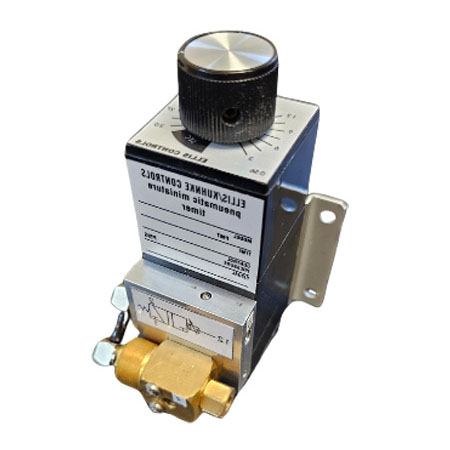
PMTV vs. PT: Compact Pilot Timing vs. Flexible Output
PT is the better comparison when the circuit needs more flexibility. PT offers on-delay or off-delay options with timing up to 60 minutes, panel- or surface-mounting, vertical or horizontal calibration, and a multi-purpose 3-way output valve.
PMTV is narrower. That is not a weakness when the circuit matches it. It means PMTV should be selected when the buyer does not need PT’s broader timing range, mounting flexibility, or output flexibility.
Use PT when:
- The circuit needs timing up to 60 minutes.
- The buyer needs on-delay or off-delay.
- The output must work as normally open, normally closed, or a diverter.
- Panel or surface mounting matters.
- Vertical or horizontal calibration matters.
Use PMTV when:
- The circuit needs compact pilot-pressure-dependent timing.
- The timer should reset on pilot-pressure removal.
- The integrated 3-way PMTV output matches the downstream circuit.
- The application does not need PT’s wider timing or mounting flexibility.
PT solves broader circuit design problems. PMTV solves a more specific compact timing problem. That distinction helps buyers avoid over-specifying PT when PMTV fits and avoid under-specifying PMTV when the circuit needs PT’s flexibility.
PMTV vs. 51020 and 54 Series: Control Logic vs. Visible Timing
PMTV is not the right first choice when the operator needs to see the set time or remaining time. That is where the 51020 and 54 Series have a clearer role.
The 51020 mini panel timer has a front dial and two vertical scales that show set time and remaining cycle time. It fits short timing applications where panel visibility matters. The 54 Series also shows set time and remaining time, but it serves much longer timing ranges and uses 4-way valve behavior.
Use 51020 when:
- The timing range is short.
- The operator needs a front-panel display.
- The user needs to see the set time and the remaining time.
- Panel mounting and rear ports fit the machine.
Use 54 Series when:
- The circuit needs long timing, up to 100 hours.
- The application needs 4-way valve behavior.
- The operator needs a visible timing status.
- The system benefits from the 54 Series timing design.
Use PMTV when:
- Visible countdown is not the main requirement.
- Compact pilot-pressure-dependent timing is the main requirement.
- Reset on pilot-pressure loss is useful to the sequence.
PMTV belongs to where circuit logic matters more than visual feedback. If the operator needs to read the timing cycle from the panel, 51020 or 54 Series is the better shopping direction.
Air and Signal Conditions Matter With PMTV
PMTV depends on continuous pilot pressure at the control port. That makes the signal condition critical. If the pilot signal flickers, leaks, vents early, or drops below the circuit's requirements, the timer resets, whether or not the time interval has elapsed.
That reset behavior is useful only when the machine’s logic expects it. In a circuit with unstable pilot pressure, this behavior results in inconsistent timing. The timer may appear unreliable, but the real issue is the signal feeding the timer.
Media requirements also matter. PMTV is intended for filtered air or non-aggressive gas, non-lubricated. That should be treated as a selection requirement, not a footnote. Dirty, wet, lubricated, or aggressive media should trigger a compatibility check before selecting the timer.
When PMTV Is the Right Choice
PMTV is the right choice when the buyer needs a compact pneumatic timer with integrated 3-way output and timing controlled by continuous pilot pressure. Its reset behavior is useful when the timing cycle should stop if the control signal disappears.
PMTV is a strong fit for:
- Compact pneumatic controls where space matters.
- Circuits with a clean, stable pilot-pressure signal.
- Applications where timing should stop and reset if pilot pressure is removed.
- Systems that need an integrated 3-way output valve.
- Applications using filtered air or non-aggressive gas, non-lubricated.
- Buyers who do not need long timing ranges, a visible countdown, or 4-way valve behavior.
PMTV is not the best fit when the circuit needs:
- Timing continues after pilot pressure drops.
- Off-delay behavior from a different timer architecture.
- Operator-visible set time and remaining time.
- Long timing ranges up to 60 minutes or 100 hours.
- 4-way valve timing behavior.
- Lubricated air or uncertain media compatibility.
- A timer that tolerates unstable pilot pressure.
The decision turns on reset logic. If pilot pressure loss cancels the timing event, PMTV is likely a good fit. If pilot-pressure loss should not cancel the timing event, another EKCI timer family is likely the better option.
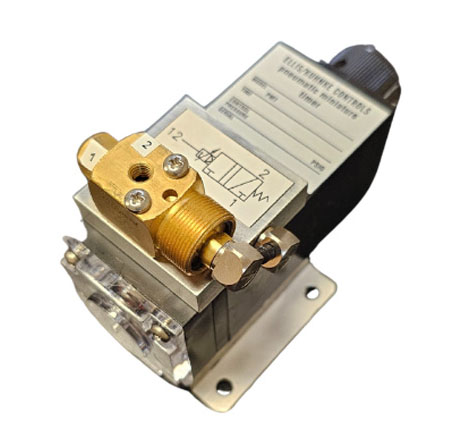
How to Shop PMTV Against Other EKCI Pneumatic Timers
Before requesting information, define what the circuit needs the timer to do. The most important PMTV filter is what should happen when pilot pressure disappears before the timing interval finishes. PMTV resets under that condition, so the buyer must want that behavior.
|
If the circuit needs... |
Start with... |
Reason |
|
Compact timing tied to pilot pressure |
PMTV |
Timing resets when pilot pressure is removed |
|
Short timing with on-delay or off-delay choices |
Series 51 |
Short timing with built-in 3-way valve behavior |
|
Short on-delay logic output |
PMT |
Fits pilot logic timing applications |
|
Visible short timing and countdown |
51020 |
Shows set time and remaining time |
|
Flexible output up to 60 minutes |
PT |
Offers on-delay/off-delay and multi-purpose 3-way output |
|
Long timing up to 100 hours |
54 Series |
Supports long timing with panel visibility and 4-way valve behavior |
This table is not a ranking. It is a circuit-matching tool. PMTV belongs at the top only when compact pilot-pressure-dependent timing and reset on pilot-pressure loss are the desired behaviors.
Match PMTV to the Circuit, Not the Category
PMTV gives EKCI shoppers a specific new choice, not a universal replacement for other pneumatic timers. Its value is tied to the circuit condition: timing starts with continuous pilot pressure, the timer resets when pilot pressure is removed, and output comes through an integrated 3-way valve.
That makes PMTV a strong option for compact pneumatic controls where the timing cycle should exist only while the pilot signal remains present. It also means PMTV should not be forced into applications that need long timing, visible countdown, off-delay behavior, 4-way valve function, or timing that continues after the pilot signal disappears.
At Ellis/Kuhnke Controls, we help customers choose pneumatic timers by first matching the timer to the circuit. PMTV is one more option in that process. The right choice starts with the signal, output, reset behavior, mounting, media, and timing requirements.
Related Reading


- Ellis/Kuhnke Controls
132 Lewis Street Unit A-2, Eatontown, N.J. 07724
Phone: 1-800-221-0714
Fax: 732-291-8154
Email: Info@ekci.com
- Home Pneumatic Controls Technical Info CAD Drawings Contact Us Pneumatic Timers Blog Site Map