
PT vs. PMT vs. PMTV Pneumatic Timers: What Actually Changes in the Circuit
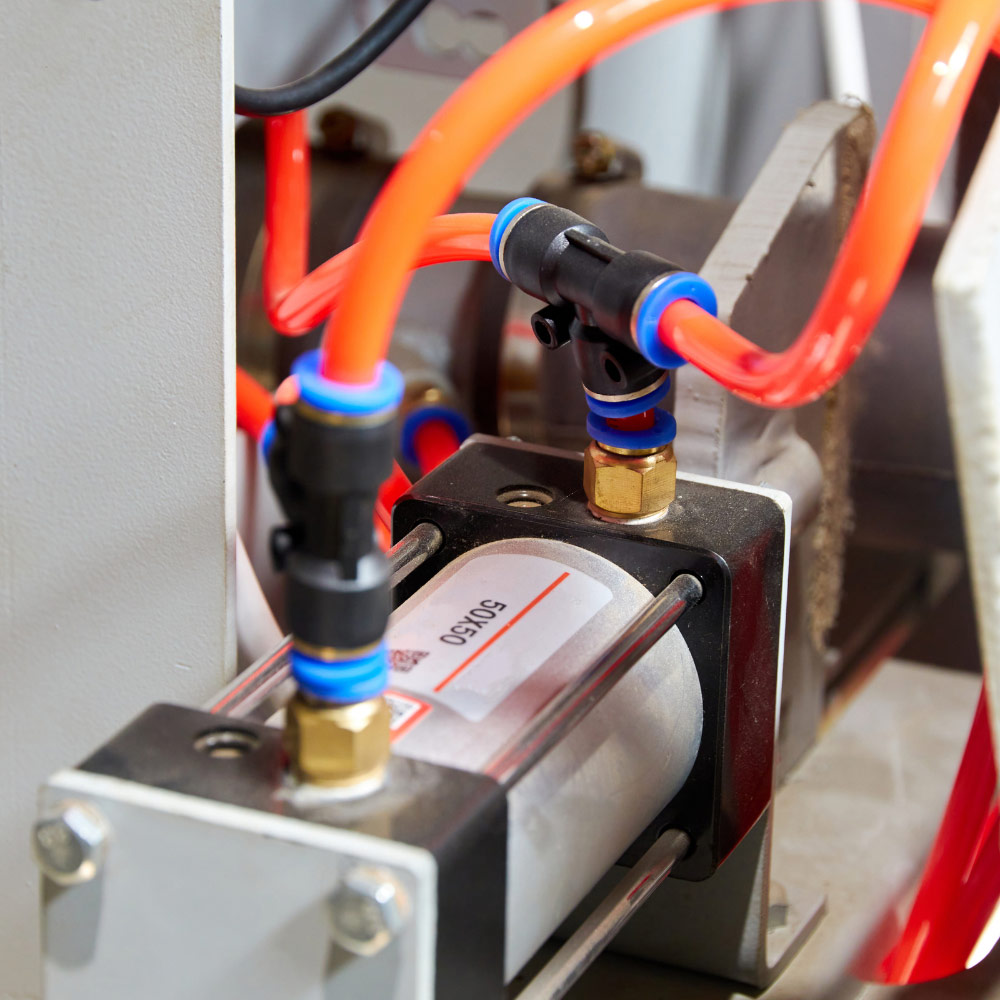
PT, PMT, and PMTV pneumatic timers are not interchangeable; they have different housings. They represent three distinct timing architectures that change how a pneumatic circuit initiates timing, delivers output, resets, and interacts with downstream valves. Selecting the wrong one does not just change delay duration; it changes system behavior.
A timer in a pneumatic system is not a passive component. It directly affects sequence timing, valve actuation, and control logic. The differences between these three series determine whether the timer is acting as a primary control device, a pilot signal generator, or a compact integrated valve solution.
Why Comparing Only Delay Time Leads to Incorrect Selection
Delay range alone cannot determine timer equivalence because timing method, output type, and reset behavior directly change how the pneumatic circuit operates under real conditions. Delay range is typically the first parameter reviewed, but it does not determine how a timer behaves once installed in a pneumatic circuit. Because PT, PMT, and PMTV use different timing initiation methods, output structures, and reset conditions, identical delay settings can still produce different control outcomes.
Two timers, both set to 30 seconds, can behave differently if:
- One starts timing from pilot pressure
- One starts from a vacuum-based mechanism
- One provides direct 3-way output
- One only provides a pilot signal
This difference changes:
- Whether a downstream valve shifts directly or indirectly
- Whether the sequence continues after signal loss
- Whether pressure fluctuation affects timing
Where PT Timers Fit In A Pneumatic System
PT timers are the correct choice when a circuit requires long delay ranges or when the sequence must support both on-delay and off-delay behavior with direct pneumatic output capability. Once the delay range is understood as an incomplete selection factor, the next step is to identify when a timer must actively control the sequence rather than merely support it. PT represents the configuration in which the timer itself serves as the primary control element, offering both logic flexibility and direct pneumatic output.
What PT Does
- Timing range:1 seconds to 60 minutes
- Logic:on-delay and off-delay
- Output:3-way valve (direct pneumatic output)
- Initiation:control pressure via diaphragm
- Porting:1/8" NPT
- Mounting:panel or surface
Why That Matters in Real Circuits
PT is not just a timer. It acts as a functional control valve with built-in timing. That makes it appropriate for:
- Clamp dwell before release
- Delayed exhaust after signal removal
- Direct actuation without intermediate pilot valves
- Long-duration sequences measured in minutes
What Goes Wrong if PT is Not Used
- Removing PT removes off-delay capability
- Substituting with PMTV introduces reset on pilot loss
- Substituting with PMT forces additional valves and plumbing
Where PMT Timers Fit in a Pneumatic System
PMT timers are the correct choice when the application requires a short on-delay and the timer is only responsible for generating a delayed pilot signal to control another valve. With PT established as the full control solution, the comparison shifts to cases where the timer is not intended to drive the circuit directly. PMT introduces a different role by limiting output to pilot-level signaling while using a distinct timing mechanism tied to atmospheric conditions.
What PMT Does?
- Timing range: 0.3 to 180 seconds
- Logic: on-delay only
- Output:pilot-level signal
- Initiation:control signal creates internal vacuum
- Timing mechanism: atmospheric-pressure driven
- Porting:10-32 or 1/8 NPT
- Operating pressure:15 to 100 psi
Critical Technical Distinction
PMT is designed to:
- Operate the control pilot of a receiving valve
- Not function as a primary output valve
Its flow output:
- Approximately 0.1 CFM at 50 psi
Why that Matters in Real Circuits
PMT belongs in pilot logic, not output flow. Correct use cases:
- Delayed pilot to a directional control valve
- Sequencing events such as purge delays
- Control signal conditioning in compact panels
What Goes Wrong if Misused
Direct actuator control results in:
- insufficient airflow
- unreliable motion
Replacing PT removes:
- off-delay capability
- direct control functionality
Unique Advantage
PMT timing is described as:
- Independent of line pressure during timing cycle
This matters when:
- Supply pressure varies during operation
- Timing consistency is required across cycles
Where PMTV Timers Fit in a Pneumatic System
PMTV timers are the right choice when a short on-delay is required, and the design needs a compact unit with an integrated 3-way output valve rather than a separate pilot-controlled valve. After separating full control (PT) from pilot sequencing (PMT), the remaining gap is situations that require direct output but within tighter physical and functional constraints. PMTV addresses this by combining short-range timing with an integrated 3-way valve in a compact form.
What PMTV does
- Timing range:3 to 180 seconds
- Logic:on-delay
- Output:integrated 3-way valve
- Initiation:continuous pilot pressure
- Reset:immediate on pilot removal
- Flow:
- ~4.0 SCFM at 50 psi
- ~6.8 SCFM at 100 psi
- Mounting:panel or subplate
- Form factor: miniature
Why that matters in real circuits
PMTV combines:
- Timing function
- Output valve
- Compact installation
Correct use cases:
- Tight control cabinets
- Small automated fixtures
- Simplified pneumatic circuits
- Retrofit applications with space constraints
What goes wrong if misused
Loss of pilot pressure causes:
- immediate reset
- loss of output
Not suitable for:
- hold-after-signal sequences
- off-delay behavior
Direct Comparison: PT vs PMT vs PMTV
Each timer series differs in role, not just in specification, and those differences determine whether the timer functions as a control device, a pilot generator, or a compact output solution. Given that each series is defined by its role in the circuit, a structured comparison is required to isolate the exact points of divergence. The differences in logic, flow capability, timing initiation, and reset behavior can now be evaluated side by side to show where overlap exists and where substitution fails.
|
Factor |
PT |
PMT |
PMTV |
|
Timing Range |
0.1 sec to 60 min |
0.3–180 sec |
0.3–180 sec |
|
Delay Type |
On + Off delay |
On-delay only |
On-delay only |
|
Output Type |
Direct 3-way valve |
Pilot signal only |
Integrated 3-way valve |
|
Flow Capability |
High (~9 CFM) |
Very low (~0.1 CFM) |
Moderate (4–6.8 SCFM) |
|
Timing Initiation |
Control pressure diaphragm |
Vacuum + atmospheric timing |
Continuous pilot pressure |
|
Reset Behavior |
Mode-dependent |
Reset on signal removal |
Immediate reset on pilot loss |
|
Mounting |
Panel / surface |
Panel / subplate |
Panel / subplate (miniature) |
|
Core Role |
Control device |
Pilot sequencer |
Compact output timer |
The Most Important Selection Mistake
The most common mistake is selecting a timer based on delay range while ignoring its functional role in the circuit. After comparing specifications directly, the practical risk becomes clearer: selecting a timer based on surface-level similarity rather than functional role. The overlap in timing ranges creates a false equivalence that breaks down once the timer is placed in a working circuit.
This mistake leads to:
- Incorrect valve actuation
- Unstable sequence timing
- Unnecessary system complexity
- Redesign after installation
Selection Checklist for Real Applications
Timer selection must be based on the logic type, output requirements, and system constraints, rather than on delay duration alone. Once the failure point is defined, the selection process must be reduced to repeatable criteria that prevent it. Rather than comparing features, the decision must be structured around logic type, output requirement, and system constraints.
Use this Checklist:
- Logic requirement
- need off-delay → PT only
- on-delay only → all options
- Output Requirement
- actuator control → PT or PMTV
- pilot signal only → PMT
- Timing Range
- 3 minutes → PT
- ≤3 minutes → all
- Reset Behavior
- must hold after signal → PT
- must reset immediately → PMTV
- Space Constraint
- compact → PMTV
- subplate logic → PMT
- flexible install → PT
- System Stability
- pressure variation concern → PMT consideration
How to Choose Between PT, PMT, and PMTV Pneumatic Timers
PT, PMT, and PMTV differ in function, not just format, and each defines a different role in a pneumatic circuit: PT controls the sequence directly, PMT controls the pilot of another valve, and PMTV provides a compact combined timing and output solution. By positioning each series by its role, limitations, and selection criteria, the comparison yields a single decision framework. The differences between PT, PMT, and PMTV define how timing is introduced into a circuit, how outputs are delivered, and how sequences respond to signal changes.
Related Reading
- How Pneumatic Indicators Work and Which Type to Use
- Comparing Ellis/Kuhnke Pneumatic Indicators: A Technical Selection Guide
- Where Pneumatic Timers Fit in Pneumatic Control Systems
- New Kuhnke Pneumatic Cylinders: How to Choose the Right Standard for Your Machine
- Pneumatic vs Electronic Timers for Hazardous Areas: Safety and Performance Compared


- Ellis/Kuhnke Controls
132 Lewis Street Unit A-2, Eatontown, N.J. 07724
Phone: 1-800-221-0714
Fax: 732-291-8154
Email: Info@ekci.com
- Home Pneumatic Controls Technical Info CAD Drawings Contact Us Pneumatic Timers Blog Site Map