
How Pneumatic Indicators Work and Which Type to Use
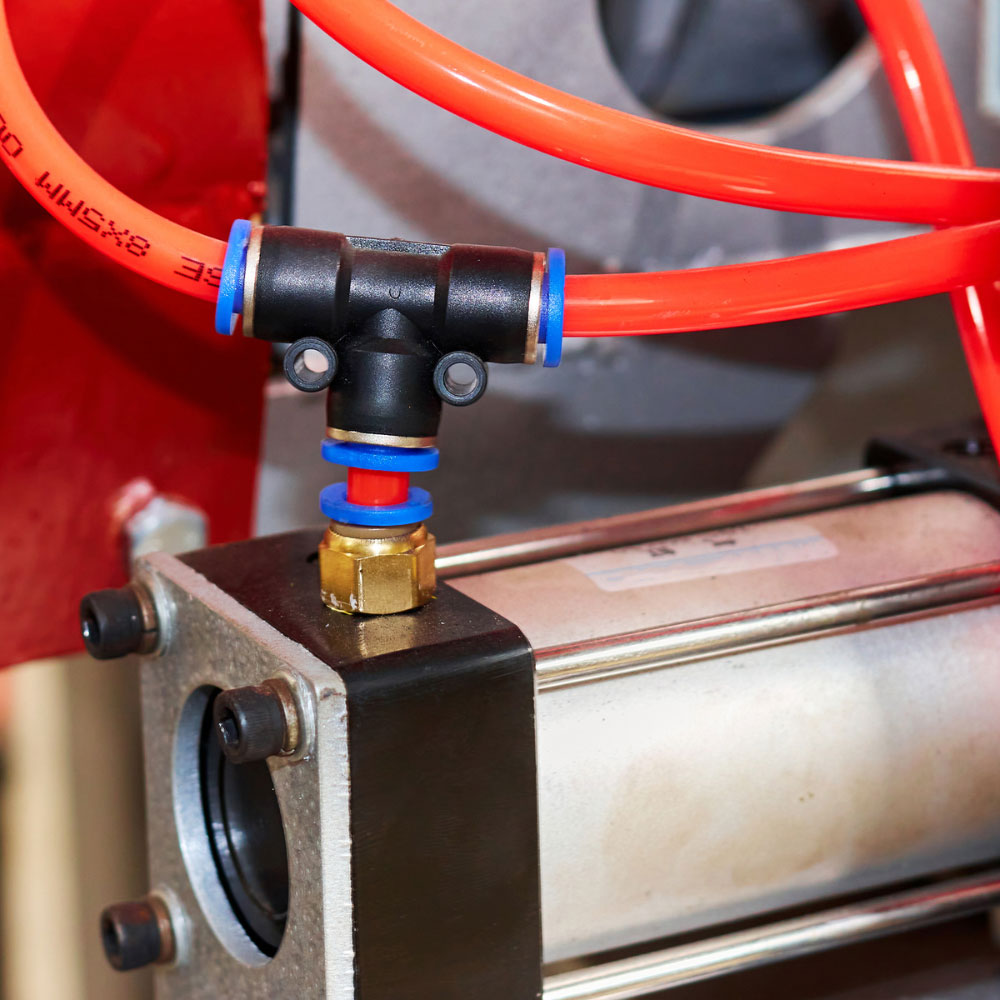
Pneumatic indicators convert air pressure at a specific point in a circuit into a visible status signal. The common types are defined by how they are used, not just by product family. In practice, that means mounting location, operating behavior, visibility, and pressure range determine the right choice. This matters because in a working pneumatic system, the value of an indicator is not that it responds to pressure. It is that it shows the right condition, in the right place, in a way that can actually be read and acted on.
What a Pneumatic Indicator Is Actually Telling You
A pneumatic indicator is a local confirmation device. It shows whether pressure has reached a defined point in the system, or in some designs, whether a pressure-actuated state change has occurred and been maintained. That is a narrower role than many descriptions suggest, but it is exactly why these devices are useful. They provide direct confirmation at the point where a decision is being made.
In real systems, pressure state is often inferred indirectly. An actuator moves, or it does not. A sequence completes, or it stalls. Those outcomes do not always identify where the condition changed. An indicator reduces that ambiguity by making pressure visible at a specific location. That allows an operator or technician to confirm whether a signal reached the expected point without having to work backward through the entire system.
This is where the device earns its place. It is not a general monitoring tool. It is a targeted visibility tool used to confirm conditions that would otherwise require interpretation. That distinction should guide its selection and placement.
How Pneumatic Indicators Work
The operating principle is direct. Pressure enters the indicator and acts on an internal mechanism, producing a visible change. That change may be a colored element moving into view, a ball shifting position, or a two-color display transitioning between states. The visual output is tied to pressure conditions at that point in the circuit.
What matters is not the motion itself, but what that motion represents. The indicator shows that pressure has crossed a threshold and triggered a defined response. It is not measuring, regulating, or interpreting the system. It is exposing a condition.
Where this becomes more important is in how the indicator behaves after actuation. Not all indicators communicate the same thing over time.
- Spring-return designsshow whether pressure is present at that moment. When pressure drops, the visible signal returns.
- Maintained or detent-style designshold a changed position until a second signal resets them. This preserves a visible record that an event occurred.
That difference affects how the indicator is used. A spring-return indicator is well-suited for confirming the presence of live pressure. A maintained indicator is more useful when the application requires the visible state to remain changed after the event, such as confirming that a signal occurred in a sequence, even if the system has moved on.
This is not a minor variation. It changes what the indicator communicates and how it supports troubleshooting.
Why Mounting Style Changes the Job of the Indicator
After operating behavior, the next defining factor is where the signal needs to be seen. The mounting style determines that, and it changes the indicator's role in the system.
A panel-mounted indicator is typically used when the signal needs to be visible to an operator or at a control interface. The goal is quick, readable confirmation without requiring access to the pneumatic components themselves. In that context, readability, viewing angle, and layout integration matter as much as the pressure response.
An indicator mounted closer to the pneumatic connection serves a different purpose. It is used to confirm pressure at the line, port, or component level. This is where indicators become part of testing and troubleshooting, not just operation. The user is not scanning a panel. They are checking whether pressure is present at a specific point in the circuit.
This distinction is functional, not cosmetic:
- Panel-mounted indicators support operator visibility and system status confirmation
- Indicators near the pneumatic path support local verification and troubleshooting
Once that difference is clear, the idea of "type" becomes more useful. The right type is the one that places the signal where it needs to be read, not the one that simply fits the category label.
What the Common Types Really Are
If the question is "what are the common types," the useful answer is not a list of models. Pneumatic indicators are better understood by the design choices that define how they function in the system. Those choices determine how the signal is seen, how it behaves, and how it fits into the application.
The main distinctions are:
- Mounting style:Panel-mounted versus indicators positioned at or near the pneumatic connection
- Operating behavior:Spring-return indication versus maintained or switched indication
- Visual method:Ball movement, color change, or protruding element used to show status
- Pressure suitability:Whether the actuation behavior aligns with the actual operating conditions
These are the differences that separate one type from another in a way that matters in practice. Product families exist within those distinctions, but the families themselves are secondary. Selection should start with how the indicator needs to function, not which series name appears first.
When those variables are understood, the category becomes easier to navigate. Different indicator families exist because systems require different visibility strategies. Some applications prioritize panel readability. Others prioritize local confirmation. Some require immediate feedback. Others require a maintained visual state. The "type" is simply the configuration built around those requirements.
The Design Differences That Matter in Selection
Once the category is understood at that level, selection becomes more direct. The key is to evaluate the indicator based on how it will be used, not just on its description.
The first consideration is operating behavior. If the goal is to confirm the presence of live pressure, a spring-return indicator is appropriate. If the goal is to preserve a visible state after actuation, a maintained design is more suitable. This determines whether the indicator reflects a moment or records an event.
Visibility comes next. In a real installation, the question is not whether the indicator can be seen. It is whether it can be read quickly and accurately under the actual viewing conditions. Indicators designed to extend beyond the panel surface or present a clear color contrast address this directly. That is not a secondary feature. It determines whether the signal is usable.
Pressure range must also align with the application. An indicator that actuates outside the operating range of the system will not provide meaningful information. The visible response must correspond to the pressure condition the user is trying to confirm.
Mounting and connection details complete the picture. Port size, panel fit, and installation location all affect whether the indicator integrates cleanly into the system. These are not abstract considerations. They determine whether the device works as intended once installed.
A straightforward way to approach selection is to start with a small set of questions:
- What pressure condition needs to be confirmed?
- Should the visible state return immediately or remain changed?
- Where does the signal need to be seen?
- What are the actual viewing conditions?
- Does the operating range match the system?
- Does the mounting configuration fit the installation?
Those questions do more to narrow down the correct type than comparing product names.
Choose the Indicator Based on the Job It Has to Do
At EKCI, we do not treat pneumatic indicators as interchangeable visual accessories. We look at what the indicator needs to confirm, where that confirmation needs to happen, and how the signal needs to behave once pressure reaches the device. That is what determines whether a panel-mounted indicator, a locally mounted indicator, a spring-return design, or a maintained indication style is the right fit.
If you are specifying a pneumatic indicator for a new system, replacing one in an existing assembly, or trying to narrow down the right configuration for troubleshooting or operator visibility, start with the application, not the series name. The right choice depends on the pressure condition you need to show, the location where that condition must be visible, and how the indicator must respond in service. If you need help narrowing down the right pneumatic indicator for the job, contact EKCI, and we can help you identify the best fit for the application.
Related Reading
- Where Pneumatic Timers Fit in Pneumatic Control Systems
- New Kuhnke Pneumatic Cylinders: How to Choose the Right Standard for Your Machine
- Pneumatic vs Electronic Timers for Hazardous Areas: Safety and Performance Compared
- Mounting Pneumatic Timers with Pneumatic Indicators: Comparing Panel, Subplate, and Manifold Installations


- Ellis/Kuhnke Controls
132 Lewis Street Unit A-2, Eatontown, N.J. 07724
Phone: 1-800-221-0714
Fax: 732-291-8154
Email: Info@ekci.com
- Home Pneumatic Controls Technical Info CAD Drawings Contact Us Pneumatic Timers Blog Site Map