
Why Do Pneumatic Control Systems Fail?
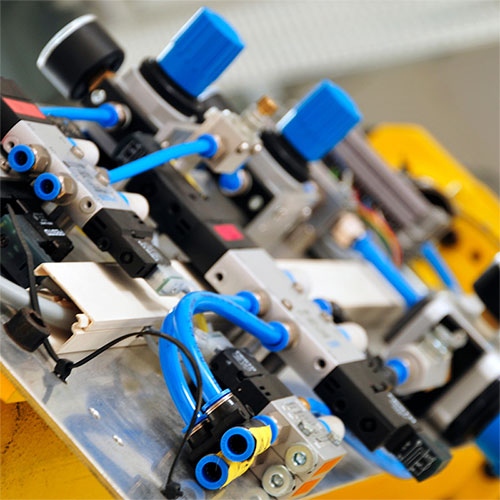
Pneumatic control systems rarely fail in an obvious way. They often exhibit timing shifts, pressure variations, and response lag, making issues hard to detect early. Nothing appears broken, yet performance degrades, so understanding these specific failure modes helps in early diagnosis. Understanding that pneumatic control systems fail not because air or components stop working, but due to pressure variations and timing issues, helps maintenance managers see the value of proactive maintenance in avoiding costly production disruptions.
Why Pneumatic Control Systems Remain a Practical Choice
Before getting into specific components, it is important to understand why pneumatic control systems are still chosen in modern applications. This is not about nostalgia or legacy equipment. It is about the type of control required and the conditions under which the system must operate. When those factors align, pneumatic control becomes a deliberate choice rather than a default.
Consider a production line where electrical noise interferes with signal integrity. In this situation, sensors and electronic controls may produce inconsistent readings or require additional shielding and filtering to maintain stability. A pneumatic control system, by contrast, operates independently of electrical interference, allowing signals to be transmitted through air pressure without degradation. That example is not theoretical; it directly affects uptime because unstable signals lead to inconsistent machine behavior and harder troubleshooting.
The importance of that distinction lies in maintaining control without unnecessary complexity. Pneumatic systems remove the need to manage, monitor, and maintain layers that would otherwise require it. There is no software state to question and no firmware to update. What exists is a physical system where cause and effect can be observed directly, which is why, in the right environment, pneumatic control continues to outperform more complex alternatives.
When do Pneumatic Systems Break Down?
Pneumatic systems rarely fail all at once. They start to behave differently, cycles shift, responses feel delayed, and results are no longer consistent, even though nothing obvious is broken. That is what makes these issues frustrating, because the system still runs, just not the way it is supposed to. Most of the time, the problem is not the air or the component; it is how the system handles pressure, timing, and response under real conditions. The following breakdowns show where that gap is most evident.
Inconsistent Timing Caused by Unstable Pressure
Pneumatic timing is not independent of the system. It is created by how air moves, which means any change in pressure changes the timing output. That relationship is often ignored during setup because systems are typically calibrated under stable, low-demand conditions.
The problem shows up when the system is fully loaded. As more actuators cycle, pressure drops across the line. The timer still functions, but it reaches its internal threshold faster or slower depending on the rest of the system's activity. That changes dwell time, clamp duration, or sequence timing without requiring any adjustment.
What makes this difficult is that the system appears correct during testing and inconsistent during production. The timer is blamed because it is the visible control point, but the actual issue is that the pressure at that location is not controlled. Without isolating or regulating that section of the system, timing will always follow demand rather than remain fixed.
Lack of Visibility Into System State
One of the most frustrating pneumatic breakdowns is the one that does not look like a breakdown at all. The system appears to have air, the main supply checks out, and yet a function still fails somewhere deeper in the circuit. That disconnect matters because it turns a specific pressure problem into a vague troubleshooting problem. When pressure cannot be seen at the point where the work is actually happening, maintenance is forced to work backward from symptoms rather than confirming the condition directly.
- Pressure can be present at the supply and missing where the function actually happens
- Localized drops are often caused by restrictions, leaks, or competing demand
- Without an indication, there is no way to confirm pressure at the point of failure
- Troubleshooting shifts toward replacing parts instead of verifying conditions
Pneumatic systems do not provide feedback on their own. If pressure is not measured or displayed at a specific point, it is unknown. This creates a gap between what the system is doing and what operators believe it is doing.
In real situations, this leads to repeated misdiagnosis. A machine stops, supply pressure checks out, and components are replaced based on an assumption. The system may return to operation briefly, but the issue comes back because the actual condition was never confirmed. Adding visibility at the right points closes that gap and turns an intermittent issue into a defined one.
Counting Without Control Over What Happens Next
Counting cycles only becomes useful when it controls the process. Without that connection, the counter is passive, and the system continues running regardless of the count. In production, that creates drift. A process that is supposed to stop at a specific number continues past it because no action is tied to that threshold. Operators may catch it, but not always at the exact moment, and even small delays can lead to overproduction or missed checkpoints.
This is not a failure of counting accuracy. It is a failure to connect the count to a response. When the counter is tied directly to an output, the system enforces its own limits. It stops at the defined point every cycle, removing reliance on timing or attention from outside the system.
Valve Selection That Does Not Match System Response Requirements
The issue with valve selection is not that the valve fails. It responds differently from the system's expectations. That difference is often small, but it becomes significant in applications where timing, force, or sequence matters.
What this typically looks like in operation:
- A clamp releases slightly later than intended, shifting part position
- An actuator moves inconsistently because the flow cannot keep up with demand
- A shutoff signal is sent, but pressure lingers longer than expected
- Exhaust is restricted, slowing response during critical transitions
Each of these outcomes comes from a mismatch between the valve and the system's actual requirements. Flow rate, exhaust capacity, and response speed determine how quickly air can move, not just whether it moves at all.
General-purpose valves are often used because they are available or familiar. In real operating conditions, that choice manifests as lag, inconsistency, or an incomplete response. The control logic may be correct, but the system cannot execute it properly because the valve cannot deliver the required behavior.
What These Breakdowns Actually Do to Production
These breakdowns do not stop a system immediately, which is exactly why they cause problems. The system continues to run, but it stops running consistently. That inconsistency shows up in output quality, cycle timing, and operator behavior long before anything is identified as a failure.
In practice, this creates measurable issues:
- Cycle times begin to vary between runs
- Operators start making manual adjustments to "keep it running"
- Quality issues appear only during full production, not testing
- Maintenance replaces components without confirming the root cause
A pneumatic system that behaves differently under load than it does during setup is not failing randomly. It is exposing gaps in how the system was defined. The breakdown is not in the components. It is in how pressure, timing, and response were expected to behave versus how they actually behave during operation.
Get Pneumatic Control Right Before It Becomes a Production Problem
Most pneumatic breakdowns are not random. They come from pressure instability, poor visibility, incomplete control logic, and component choices that do not match the job. At EKCI, we help customers identify those weak points and select pneumatic timers, indicators, counters, valves, and related controls that support reliable system performance. If your pneumatic system is drifting, stopping inconsistently, or becoming harder to troubleshoot, it is time to look at how the system is built, not just which part failed. Contact EKCI to discuss the application and get the right pneumatic control solution in place.
Related Reading


- Ellis/Kuhnke Controls
132 Lewis Street Unit A-2, Eatontown, N.J. 07724
Phone: 1-800-221-0714
Fax: 732-291-8154
Email: Info@ekci.com
- Home Pneumatic Controls Technical Info CAD Drawings Contact Us Pneumatic Timers Blog Site Map