
Where Pneumatic Timers Fit in Pneumatic Control Systems
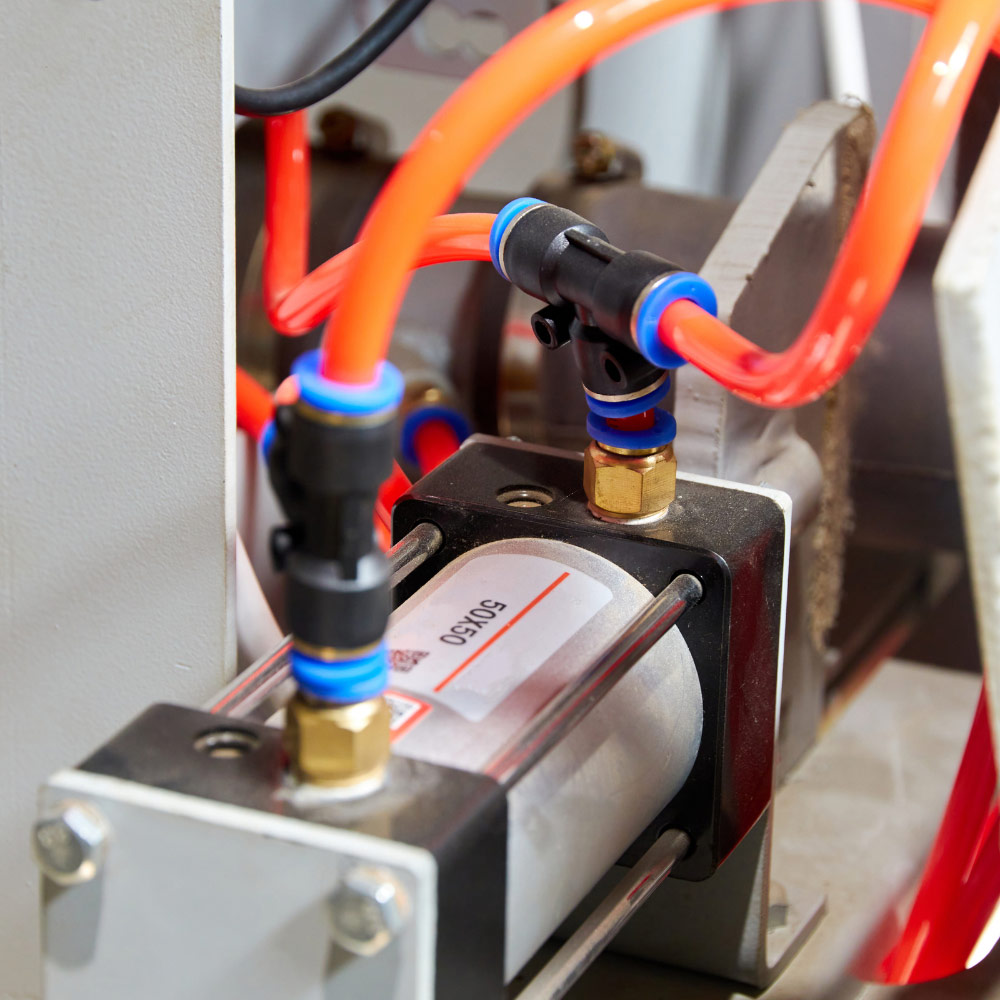
Timing failures in pneumatic systems are rarely random. They show up as cylinders moving out of order, clamps engaging too late, valves shifting before pressure stabilizes, and machines that behave fine in testing but drift in production. When timing is the failure mode, the real question is not whether timing matters; it is where timing must be enforced.
The Benefits of Pneumatic Timers
Pneumatic timers fit in pneumatic controls when a sequence or dwell must be consistent at the control level, cycle after cycle, without depending on operator timing or mechanical luck. When timing is enforced inside the pneumatic circuit, the system stops racing itself, faults become repeatable, and the root cause becomes easier to isolate.
The Decision That Determines Whether Pneumatic Timers Belong
Once timing is identified as the issue, the next step is deciding whether the delay should be enforced pneumatically in the circuit or handled elsewhere. This matters because the wrong choice creates a system that appears controlled but still fails under load, pressure variations, and real-cycle demand.
Pneumatic timers are the right tool when one action must be blocked until a prior action has completed and settled. A clamp may need time to fully seat before a press motion is allowed. A gripper may need a short dwell to prevent a part from shifting before an index cylinder moves. In these cases, a simple timing gate prevents premature signals and stabilizes the sequence without adding electrical timing at the point of actuation.
Pneumatic timers are the wrong tool when timing is not the root problem. If a cylinder hits hard because the flow is uncontrolled, delaying the start does not reduce the impact. If a valve shifts inconsistently because supply pressure droops during peak demand, delay times drift, and the system still fails. Pneumatic timers enforce order; they do not fix unstable fundamentals.
A correct decision starts with the failure pattern. If the failure is sequence order or dwell, pneumatic timers are often the cleanest control-level fix.
Where Pneumatic Timers Fit In the Circuit, And Why Placement Matters
After the decision is made, placement determines whether the timer actually solves the problem. In effective pneumatic controls, timers delay control signals and pilot logic, not mechanical motion, as a workaround.
Pneumatic timers belong on the signal that permits the next step. When a fixture must hold for a dwell before a downstream cylinder moves, the timer should delay the pilot signal that enables that downstream motion. When a clamp must remain engaged briefly before release, the timer should delay the release signal rather than starving the actuator. This turns timing into a gate; the next event cannot occur until the time condition is met.
Misplacement produces predictable waste. When a timer is used to delay air delivery to an actuator simply because motion feels wrong, the circuit becomes harder to troubleshoot, and the underlying issue remains. Correct placement makes the circuit more predictable because timing is tied to the control decision rather than the mechanical symptom. Placement is the difference between enforced sequence and delayed chaos.
What Pneumatic Timers Solve When Applied To Real Failure Patterns
Placement matters because pneumatic timers are not general upgrades. They solve specific, repeatable failure patterns that occur when real production conditions introduce small timing variations. The value is not theoretical; it is the difference between a sequence that holds and one that drifts.
- Premature motion that causes misalignment and wear:Premature motion happens when the next step is allowed to fire before the prior step has fully seated and stabilized. A clamp begins to engage, but a downstream cylinder advances while the part is still shifting. Under light load, the sequence may appear fine. Under production load, the clamp settles more slowly, the next actuator arrives early, and misalignment or tool wear follows. The solution is a forced dwell on the enabling signal, so the next step cannot start until the clamp has had time to complete and settle.
- Overlapping actions that create intermittent jams:Overlap shows up when two events that should be separated occur close enough together that the machine occasionally collides with itself. Small changes in friction, payload, or the pressure ramp determine which actuator wins, making the fault hard to reproduce. The result is a jam that appears random because the system has no gate enforcing separation. The solution is to signal-separate by holding one control signal long enough for the first action to clear, preventing two actions from competing in the same window.
- Missing dwell that drives drops, misfeeds, and inconsistent placement:Some steps require a short hold for stability. The gripper closes, and pressure equalizes; the part seats, and only then should the next motion occur. Without dwell, the next action introduces disturbance while the part is still settling, leading to drops, misfeeds, or inconsistent placement. The solution is a controlled dwell window that keeps the sequence from advancing until the part is stable, turning quality into a controlled outcome instead of a lucky one.
When these patterns exist, pneumatic timers become mandatory. They become the control mechanism that makes pneumatic controls repeatable under real operating conditions.
How Pneumatic Timers Create the Delay, and What Must Be True For Consistent Results
Once the right failure pattern is targeted, performance depends on how pneumatic timers generate delay. Pneumatic timers create timing by controlling how pressure builds or exhausts in a timing chamber through an adjustable restriction. The output changes only after the chamber reaches the switching threshold, which is why timing behaves like a controlled ramp rather than a digital on-off event.
This mechanism makes air conditions part of the timing strategy. Stable supply pressure improves repeatability by maintaining consistent chamber fill rates. Proper air preparation reduces the risk of restrictions drifting due to contamination or moisture. Longer delays tend to be more sensitive than short delays because small variations accumulate over a longer time.
Pneumatic timing can be a durable solution in pneumatic controls, but only when the air system is treated as part of the control system, not as a utility that can fluctuate without consequence.
Misapplications That Create New Faults and Wasted Troubleshooting Time
The fastest way to lose reliability is to use pneumatic timers as a band-aid. Misapplication does not just fail to solve the problem; it introduces new behavior that looks random and consumes maintenance time.
Common misapplications are predictable and expensive. They make pneumatic controls feel inconsistent, trigger repeated adjustments, and waste troubleshooting time because the timer gets blamed for problems it cannot solve. Eliminating these misapplications stabilizes the sequence faster than swapping parts.
- Using a timer to fix a speed problem:A cylinder that slams or overshoots is usually a flow control or cushioning issue. Delaying the start does not reduce impact energy; it only postpones the same mechanical event.
- Using a timer to mask pressure instability:When supply pressure droops during peak demand, delay times stretch and compress. The timer appears inconsistent, but the cause is pressure behavior, not timing logic.
- Selecting the wrong delay behavior:Some circuits require a delay before activation, others before release. Choosing the wrong function produces new sequence faults that look like intermittent failures.
- Placing the timer on the wrong signal:Delaying an actuator feed rather than the enabling pilot signal often masks the real issue and makes the circuit harder to diagnose.
A pneumatic timer should be a control component that enforces order. When it becomes a patch, it becomes a recurring problem.
Partner With Our Team to Specify Pneumatic Timers That Actually Solve the Timing Fault
Pneumatic timers deliver value only when selection and placement are driven by the sequence failure being prevented. That is the problem we solve. The work is not picking a timer because the delay range looks right. The work is identifying which control signal must be gated, which delay behavior is required, and what operating conditions will affect repeatability.
When a system is experiencing premature motion, overlap, or missing dwell, the fix is rarely an isolated part swap. The fix is to enforce timing at the correct location in the pneumatic controls so the next event is physically prevented from triggering early. That is why partnering matters. A properly specified pneumatic timer becomes a reliability upgrade that holds in production. A poorly specified timer becomes another adjustment point that never stabilizes.
For organizations sourcing pneumatic timers for industrial pneumatic controls, working with Ellis/Kuhnke Controls means selecting the timer based on the failure pattern, integrating it at the control layer, and aligning it with actual operating pressure and air preparation conditions. That is how timing stops being a recurring problem and becomes a controlled part of the system.
Related Reading
- Pneumatic vs Electronic Timers for Hazardous Areas: Safety and Performance Compared
- Mounting Pneumatic Timers with Pneumatic Indicators: Comparing Panel, Subplate, and Manifold Installations
- Fixing Inaccurate Delays in Pneumatic Timers: Practical Troubleshooting Guide
- Rotor-Stop Pneumatic Timers: Precision Control for Critical Processes


- Ellis/Kuhnke Controls
132 Lewis Street Unit A-2, Eatontown, N.J. 07724
Phone: 1-800-221-0714
Fax: 732-291-8154
Email: Info@ekci.com
- Home Pneumatic Controls Technical Info CAD Drawings Contact Us Pneumatic Timers Blog Site Map